
Defense


Devin Liddell | Principal Futurist
Design This Day | Episode 14
Jen Bucci joins Teague Futurist Devin Liddell to talk about human-centered defense design, building trust through thoughtful products, and creating a design language that spans everything from hardware to branding. Jen is the VP of Design at Anduril Industries, where she leads a multidisciplinary creative team across industrial design, graphic design, film, and photography.
Jen Bucci:
The first thing I did was ban blue. When I first got here, our hoodie was blue. And I just thought ... Well, first of all, I'm traumatized by blue. So I'm like, "My God, it's blue here too?" So I'm like, "No, no, no. Our color's black now."
Devin Liddell:
Welcome to Design This Day, a podcast about the future, the futures we want, and the people working right now to make those futures real. I'm your host, Devin Liddell. I'm a futurist at Teague. I spend a lot of my time thinking about the gap between present challenges and future solutions.
Today, I'm speaking with Jen Bucci, VP of design at Anduril Industries, a defense company specializing in autonomous technology. Jen leads a hands-on creative team that covers everything from industrial and graphic design to film and photography. Before joining Anduril, she worked in aerospace and the automotive worlds.
In this episode, Jen shares how her love for James Bond films shaped her approach to design, how branding ties into accountability and why designing for defense means developing a clear, cohesive design language, one that touches everything from hardware to typography. It's a strikingly modern approach in an industry where user experience is often overlooked.
But first, let's hear about the time Jen pitched an unusual marketing idea for Anduril's new cruise missile product.
Jen Bucci:
We had launched a product called Barracuda, and that is our family of missiles. And to do it, we had to tell the story of how easy it was to manufacture and assemble these products and how you could also use common tools to do that, and then how fast it was to take it from production to deployment. And one of the things that I'd always wanted to do was create an anime style content. That comes from sort of my own interest in it, but also Palmer, our founder, is a big anime manga fan. And I knew immediately that he would say yes to this. So I'd pitch an anime style launch video for this product.
It's kind of very typical anime style, but it went from this one missile that was being built in the factory and somebody had put a sticker on it, to market. And so you kind of develop this relationship with this main character that is this missile that's going to go out and fight. And you see it take off in the end and fly away. And that was going to be our launch video for this missile. And we don't do any of this without keeping our customers in the loop. And so we had to share with them our approach to how we were going to talk about this publicly. And we showed them storyboards and shared with them the whole approach to this.
Devin Liddell:
The idea of promoting a new missile using an anime short film would be unthinkable in most defense companies. The industry is known for being opaque and a bit old school, especially when it comes to how they present their products to the public, if they do so at all. So when Jen spoke to customers and showed them a stylized, emotional narrative about a missile as a character, she wasn't sure how it would land.
Jen Bucci:
We were nervous. We were like, "Man, are they going to think, what are these kids doing making comic books out of these things?" But it wasn't that at all. It came back with a, "Hell, yeah." I saw that as such a huge win for the way that we were approaching our brand, but also our storytelling.
Devin Liddell:
It was a risk and it paid off, but this wasn't just about getting a yes to a cool idea. There was strategy behind it.
Jen Bucci:
The case we made was that this was going to be the best way to tell this full narrative of how you could manufacture this and how you could deploy this. I think that brief was met. And then I think the second piece to that is that, yeah, it was cool and it also was going to cut through all the noise of how everybody else was talking about missiles and how they were marketing it. And I think that's another point about we want this to be extremely functional, but we also want it to be something that people are going to want to know about, but also they can be proud of. And so it's a little bit of the two sides of the coin.
Devin Liddell:
Jen's story reflects a quiet shift that is happening in the defense industry. This is an industry that makes products very different from those in the commercial world, and those products may even be unnerving to some, but they are products nonetheless. And when the value of a product is communicated clearly and confidently, it's a win for both the people who will use it and the wider public who deserves to understand it. That's where design comes in, by making complex systems feel human, understandable and real. And sometimes that means making an anime film that features a cruise missile as the protagonist.
The economics of conflict are changing. Tomorrow's competitive advantage won't come from a single breakthrough, like a stealth jet or a next gen submarine. It will come from integrated systems that gather, interpret, and act on information in real time, but making the right call will still fall to humans. And today's war fighters grew up with iPhones and voice-based navigation systems. They expect the same level of clarity and speed in the systems they use on the battlefield.
Jen Bucci:
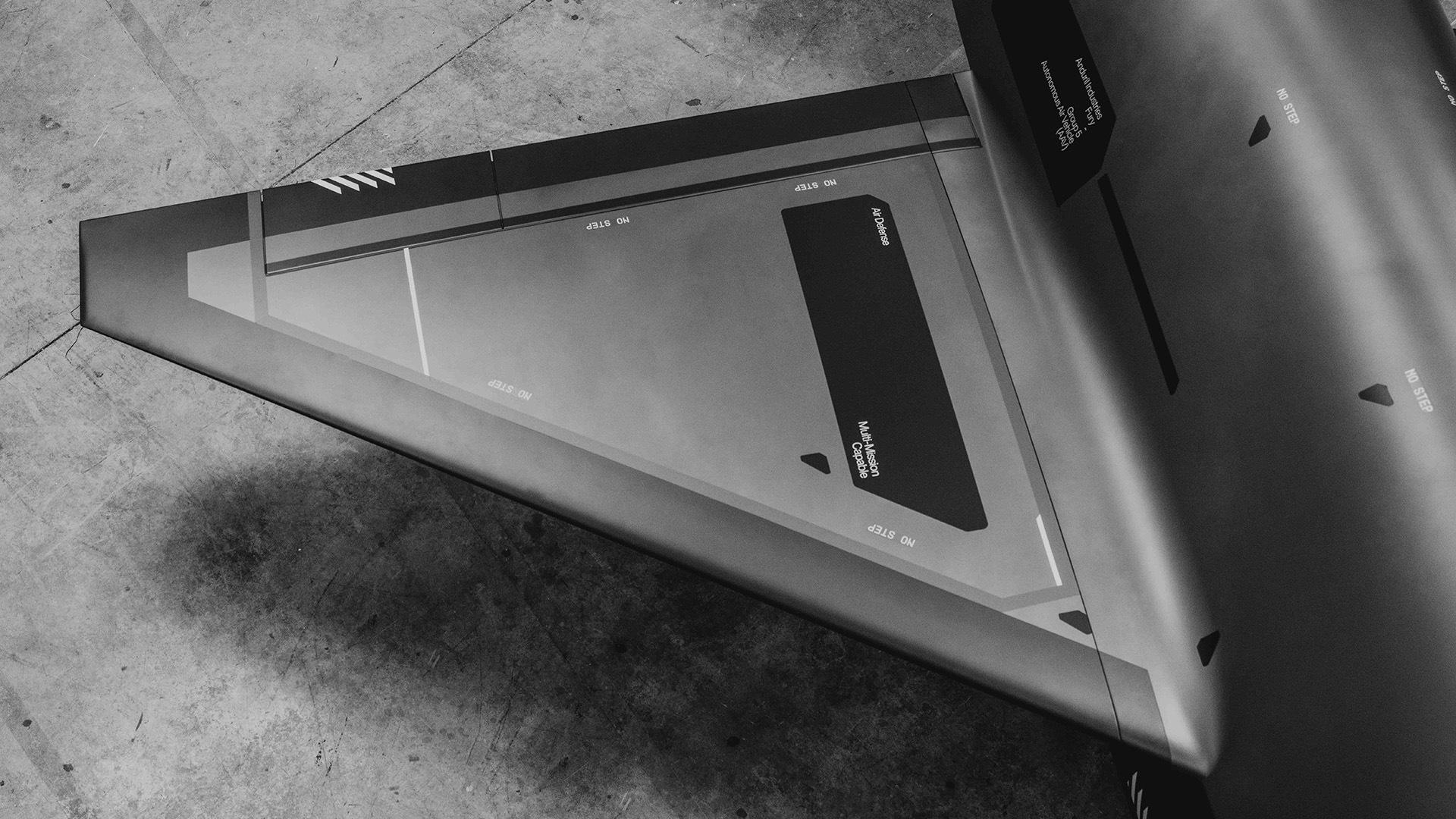
A lot of the work that we do are designing hardware and interfaces, but what we're really doing is designing for people, designing for the war fighter, who is often the 18-year-old kid that was just deployed. So a lot of the usability decisions that we make, they're not aesthetic frills, right? They're a survival multiplier. So it's really about bringing clarity to, again, the form factor we are labeling or even over-labeling, as I should say, so that there's no question what each button and lever and switch does, and really not allowing any room for error and need to dig into kind of these deep manuals, for example.
A lot of the usability decisions that we make, they're not aesthetic frills, right? They're a survival multiplier. So it's really about bringing clarity... and really not allowing any room for error.
Devin Liddell:
Speaking of manuals, I remember reading in Mary Roach's book, Grunt, which is a history of military technology. And one of the little interesting factoids that's in that book is that a nuclear submarine has more weight in paper than people. But it sounds like that's something that you're sort of actively working against. You're sort of designing away the need for manuals and instead designing buttons and switches that are just much more intuitive to use.
Jen Bucci:
Yeah. It should be very obvious. And I think that's what design brings to an industry like this, right? Where there's often this misconception that design is really about styling and it's really for picking colors and decoration. But the functionality here is really around trying to bring clarity and being able to cut these decision cycles and really reduce this cognitive load to be able to deploy things quicker and safer.
There's often this misconception that design is really about styling and it's really for picking colors and decoration. But the functionality here is really around trying to bring clarity and being able to cut these decision cycles and really reduce this cognitive load.
Devin Liddell:
Interesting. Is there any origin for that, in terms of like, did you borrow inspiration from another industry that had a similar challenge? Or how did you arrive at that as the design solution?
Jen Bucci:
I wouldn't say I was inspired by a different industry, but I was certainly inspired by a single person who is Virgil Abloh. And a lot of his Off-White apparel and kind of different projects that he's taken on, his design system is really about labeling different things, if you take a look at it. And that sort of led to our approach to how we think about putting markings on a vehicle or a box or a system.
And the strategy there is that we want to basically label every single possible thing on the system. And we have kind of different iconography and different symbolism that help us code kind of different priority of things as well. So we have like everything from critical warnings to ways that we're indicating just indicating what this is versus an action that we're asking the operator to do. We also have kind of coded colors for that as well.
So we have accent colors that are hi-vis and we picked a safety yellow, which I think it's actually called like Chrysler safety yellow or something like that. But it is the highest visible pigment to the human eye. And so we went with a color like that as our hi-vis accent color, which is also our brand accent color as well.
Devin Liddell:
Just from a design standpoint, are there any liveries that you're a special fan of?
Jen Bucci:
Ooh, great question. I'm a big Formula One fan, and so I have to say that the race cars are kind of where it's at in livery world for me. Although we're sponsoring NASCAR, so I've started to dive into the NASCAR world and the paint schemes there, they don't call it liveries. They call it paint schemes. I was very, very obviously corrected. And I think just the earliest sort of liveries I was attracted to were these like group B rally cars, Italian rally cars and kind of like back in the '70s they had some really, really good ones.
Devin Liddell:
That's awesome. They have some pretty spectacular liveries in F1. It's pretty remarkable. You can watch these cars traveling at what? 200 plus miles an hour and still see like, "Yep, that's one of the Ferraris or that's one of the Red Bulls."
Jen Bucci:
Yeah.
Devin Liddell:
If Anduril were to sponsor an F1 team, which one would you want the Anduril name on, again, just from a pure design standpoint?
Jen Bucci:
Well, it's going to have to be Aston Martin. So there can only be one. It only makes sense that way.
Devin Liddell:
Exactly.
Jen Bucci:
Aston Martin also coincidentally happens to be one of my favorite car brands. But I joked with my husband that if we ever have children, I have to name them Aston and Martin. That is a condition of our marriage. And he hated that idea.
Devin Liddell:
Did not go? He didn't approve?
Jen Bucci:
No. Till this day, he's like, "Uh-uh. No, that is terrible."
Devin Liddell:
Not going to happen. Okay. Interesting. All right. I like it. I like the idea.
People form real attachments to brands like Aston Martin. Sometimes it's about style or nostalgia, but often it's about what those brands stand for; precision, performance, and confidence. If you listen to this podcast, then you know design is not just about how something looks. Good design both supports function and shapes perception, but branding is a powerful part of the equation and it's no longer limited to consumer goods. Today, it's part of how forward-looking organizations in even the most high stakes industries communicate what they stand for, but this kind of emphasis on branding is still rare in defense.
Jen Bucci:
Thinking about Anduril as a brand, I think from the start is also a differentiator, and that changes the way that you approach, and the way that you talk about the product. I think brand is really everything, and that's why our team has a hand in just about every facet of the business and the organization. So from the way that we create materials for our customers, even in the communication design, that's something that we have a design system for and a template for, and to the way that we think about our environmental design. So the way that our campuses look and feel and the consistency across the world. We're designing arsenal one as we speak and we're making decisions around everything from the typography that are going in the factory to the way that the exterior of the building should look.
I think brand is really everything, and that's why our team has a hand in just about every facet of the business and the organization.
Devin Liddell:
Super well said. I come from a brand background as well. And I think there was a time that I would argue, 15, 20 years ago, that brand was sort of almost the exclusive domain of what I would describe as like talking. Brands were like communications centric. And I think what you're doing at Anduril has showcased this really, really important pivot that has happened to brand where brand has moved into a doing proposition. Brand is not about talking anymore. It's about doing.
Jen Bucci:
Completely. And I also think that trying to do something that really breaks through the sea of sameness, and it's not just because you want to stand out, but it's really because you want to convey so accurately what the capabilities are or why it is different, because it is different. I think when I first started, I looked at a lot of the different communication design materials and advertising and things that the other defense companies were putting out and just noticed immediately that there was a lot of blue. And so the first thing I did was ban blue.
The funny thing is when I first got here, our hoodie was blue. And I just thought, well, first of all, I'm traumatized by blue. So I'm like, "My God, it's blue here too?" So I'm like, "No, no, no. Our color is black now. We're going to make everything black. It's really high contrast. It's really clean. And then paired with Helvetica, it was just like optimal clean lines.
And my past job, which was at Boeing, but everything there was blue, right? And so I was coming from a place where I'm like, "My gosh, we really need to change this up." But a lot of the material too had a lot of renders in it. That's another thing where I'd learned. We don't want our material to look like stock imagery, right? We want to create something that's different and more representative.
Devin Liddell:
I love your beef with blue or your war on blue. I have a long-running beef with blue as well. I've got in trouble for it in the past, but to your point, people don't recognize sort of the perils of blue. Last time I checked, more than 40% of the Fortune 500 had a blue logo. There's nothing technically wrong with blue, to be fair, but the reason you see so much blue is that blue is the easiest color to agree upon. That's my take on blue. Having worked in design, you see it.
Jen Bucci:
Yeah. There's some study that it conveys trust or something, right?
Devin Liddell:
Yeah. So I love that you pivoted to black. That's the right choice. You brought up consumer design earlier, consumer products. In broad brushstrokes, what are the big distinctions or big differences when you think about your work as a designer in a military space compared to a designer working in a consumer space?
Jen Bucci:
Yeah. I think the constraints are definitely stricter and the stakes are higher, no undoes. Any sort of material selection or understanding how this is going to be rugged in the field, things like that, they're much more strict to standards.
So I think the challenge here is how do you find opportunity in something that is so restrictive? And I feel like that is the greatest difference between working in something commercial versus something in defense. There's also little room for needing to explore how to stylize this thing, right? It's really more about there is a requirement here and how do you really use ... There's this philosophy that we like to use on the design team called function as features. And it's exactly what it sounds like. We want to take advantage of the architecture of the product itself and use elements of it as design elements.
So something like the heat sink, for example, has now become kind of a big design element in the look and feel of our product. So you'll see it repeated in a lot of our systems, like Ghost and Pulsar, and that becomes one element that we'll repeat as a device. And everything else from thinking about if this is going to be a handle, then we should be thinking about how important is it to design this handle, right? It doesn't need to be superfluous, but if there's other functionality that we can incorporate, such as a frame that can also serve as a handle, for example, those are the kinds of problems that we're trying to solve to make it much more efficient and functional.
Devin Liddell:
Discussing elements of design like typefaces, color choices, or how a frame can also act as a handle can sound superficial when the stakes are this high. We're talking about defense tools and extremely powerful weapons, but this is exactly where design matters most. Jen touched on this earlier. Her team picked a specific shade of yellow for its high visibility. They picked the Helvetica typeface for its readability. In conflict zones, these design choices could mean the difference between mission success and failure.
Jen Bucci:
When I see a design product or a product that is very obviously designed, I'd like to think that there's a lot of respect that's been given to the user of that product. And so in my mind, I think of design being a signal as a respect for the user, and it says that you value their time and their lives. And so for me, of course, I'd want products like this to be designed. I'd want to live in a world where there was a lot of care and attention that went into something like this in an industry that really needs it. I also think that it instills trust for a product that is being used over and over by somebody, and there's an expected kind of result.
I think of design being a signal as a respect for the user, and it says that you value their time and their lives.
Devin Liddell:
Given the application of the products that you're designing, do you ever even lose sleep or just sort of think about the potential abuse cases of these types of devices?
Jen Bucci:
Definitely. I think it was also something that I had considered before even taking this job. I think it's important to think about, but I also think that the problems that we're solving is meant to keep the war fighter safe. And that is the ultimate goal. And also the products that we're creating are meant for deterrence. That is the number one goal. And I think that situations may allow this to fall into somebody's hands. And this is not exactly something that I like to imagine, but I would think that the battlefield and solving for that is a really big priority and something that I take a lot of pride in and be able to contribute to.
Devin Liddell:
Designing tools for defense means sitting with hard questions about where technology goes, who might use it, and what happens when things don't go as planned, but those responsibilities don't stop at the battlefield. Anduril sells its technologies to the US government and its allies, which means that these technologies are ultimately funded by the public.
Jen Bucci:
The taxpayer also has skin in the game, right? This is money that they're investing. They have a right to know. And so I think transparency is also something that we try to bring to the general public and being able to show them what the things are being worked on to defend them. But also, I think it's a little bit of education of how the defense industry doesn't have to be so obscure or availed, right? I think that a company like SpaceX has really shown us that you could do that or you could start a rocket company, create a better product and launch them on whatever day of the week you want. I think for us, it's also that we want Anduril to become a household name, much like a Lockheed or a Boeing. And to do that, we want to show our brand in a way that can be consumed by the general public and something that's attractive and something that is easy to understand.
Devin Liddell:
Yeah. No, I mean it's a really interesting topic. I mean, to be honest, like when I was getting ready to speak with you a few days ago, like doing some preparation, just like looking through the Anduril website, it's kind of almost surprising, to use your word, like I half expect most defense contractors, most defense companies to be kind of veiled. And yet at the same time, like when I went to Anduril's site, I could walk through all these really spectacular visual representations and videos and movies and animations of the products. I could see what a Ghost is about. I could see what Fury is about. I could see what Lattice does for war fighters. It's actually quite transparent. And this may be a dead end, but I'm curious to ask you, if there is a science fiction film that you particularly think nails maybe where defense is headed?
Jen Bucci:
That's a tough one. Interestingly, I've never been asked this before. I'm constantly inspired by a lot of these different films. In fact, from Minority Report, I really liked the way that they were showing what the user was seeing in an interface and being able to show that as a barrier between the viewer of the movie and also what the person was using in the actual UI. And I think that's an awesome device that we've learned from to showcase in when we're showing off our UI.
Things like Oblivion, for example, had a lot of great form factor in there, first of all, but also the way that they're showing their kind of interface interactions and also some of their hardware design, I think was really inspirational in the way that we think about how shapes and forms sort of relate to each other.
I'm also very inspired by video games. I think Cyberpunk is another one that I look at a lot. There's a whole kind of world that they've built and there's a whole kind of language of this kind of analog products that is also very technically advanced at the same time. What's another one? Destiny, I think is another game that has, I think, some of the most beautiful kind of material design and kind of UX and UI that I've seen. Also, their equipment, like their kind of guns and their masks and their attire, all really great work.
Devin Liddell:
I'm so glad I asked you that, by the way. You paused and then you just hit home run after home run on that. I was like, "Oh, let me just gather myself here before I drop all these amazing examples." That was awesome. I love it. Okay, cool.
I want to be mindful of your time. So let's actually shift into a lightning rounds. Is there another industry or even an innovation within an industry that you've looked at and said, "That's really spectacular. I want to borrow from that." Or, "I know how I can learn from that, what they've done there."
Jen Bucci:
Yeah. A lot of the inspiration that I look at and share with the team comes from the way that other retail brands are talking about their products or launching their products. So if we think about sneaker drops, for example, how they're able to really have built a whole world around how that operates and setting expectations for people who have that demand, but also being able to tap into culture and really creating products that people want and learning from that in the way that we are doing our product launches, but also we do our internal swag.
And I have to say it's quite good and we treat it as our own little street wear brand too, but thinking about how to create fandom and how to really talk to the general population is something that we learn from all the time from other brands that do it really, really well.
If I think about hardware, I think about Apple a lot, right? And then the ecosystem that they've been able to create across their family of products and how they've taken a shape and they've been able to replicate it across different form factors, different products. So yeah, lessons learned in a lot of the greats out there.
Devin Liddell:
That's a great, great answer. Is there any show or a book even that has sort of influenced how you think about your work as an innovator?
Jen Bucci:
I would say that really the lore that has been the most influential to me, I think, is 007. The fact that Q was creating really high-tech devices and Bond is out there doing it with so much style. I think it's kind of the two worlds, the tech and the style that really clashed and that met, and also my other favorite movie is Back To The Future. And the DeLorean is the time machine and Doc says, "Well, why not do it with style?" Right? And so I think a lot of these that I gravitate to are really about being able to take really high-tech machines, but also utilize them and design them with a lot of flair.
I think a lot of these that I gravitate to are really about being able to take really high-tech machines, but also utilize them and design them with a lot of flair.
Devin Liddell:
That's it for today. Thank you for listening to Design This Day, a podcast by Teague. Subscribe on your favorite podcast app so you don't miss the next episode. And if you have a complex problem that needs solving, we'd love to hear from you. Visit us at teague.com or send us an email at hello@teague.com.
Author


Principal Futurist
Devin designs preferred futures in aviation, automotive, smart cities, personal mobility, space travel, and more.


